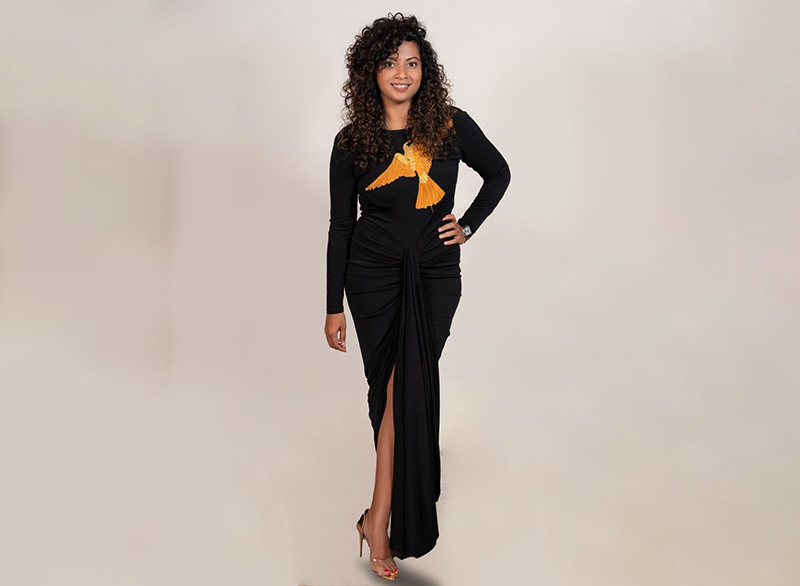
Fazeena Rajabdeen stands at the forefront of Sri Lanka’s fashion evolution as the Executive Director of Colombo Fashion Week.
With a visionary approach that bridges local talent with global opportunities, Fazeena has been instrumental in elevating Colombo Fashion Week into a sought-after platform for designers, buyers and industry innovators. In this interview, she shares insights on the growth of Sri Lanka’s fashion landscape, the challenges and triumphs of steering a major fashion event, and her aspirations for the future of the industry.
(Q) As Executive Director of Colombo Fashion Week, how do you define CFW’s role in shaping Sri Lanka’s fashion identity?
(A) CFW is fundamentally the backbone of Sri Lanka’s fashion industry. Over 23 years, we’ve built more than a platform, we’ve crafted an entire fashion ecosystem that didn’t exist before.
What I’m most proud of is that over 80% of the designers you see in Sri Lanka today have come through our development system. That’s not accidental, it’s the result of building infrastructure, including partnerships, brand development support, retail insights, and international networks. We’ve essentially created the conditions for a Sri Lankan fashion industry to emerge organically, rooted in our heritage but completely contemporary in its expression. This has resulted in the creation of few design education schools, fashion retailers, model academies.
CFW has given Sri Lankan fashion an identity that carries weight, one that speaks to craftsmanship, sustainability, and creative integrity. That’s the legacy we continue to build upon.
(Q) What has been your personal vision in steering Colombo Fashion Week over the years?
(A) My vision has always been about scale and sustainability, taking what was a seasonal event and building it into a year-round business ecosystem. My key focus was on developing the next generation through structured programs like emerging designers and CFW Accelerate, embedding responsibility into fashion through tools like the Responsible Meter, and expanding our reach with new editions and International partnerships.
We’ve moved from showcasing fashion to building the infrastructure that makes sustainable, commercially viable fashion careers possible in Sri Lanka. Another mission was to expand the platform so Sri Lankan designers aren’t just showing collections, they’re building brands that compete regionally, especially within South Asia.
(Q) Fashion Weeks globally are evolving. How has CFW adapted while staying true to its roots?
(A) The role of fashion platforms has evolved, as the development of fashion, the consumption of fashion and choices fashion consumers make has changed. At the core Fashion is an emotional choice hence engagement with fashion consumers remains high priority. CFW as a platform that leads the fashion industry, creates formats that effectively engage consumers with the fashion creators and with that open opportunities in Sri Lanka and internationally through BRICS, South Asia and Beyond. There are interesting new projects planned to push this forward.
(Q) How does CFW contribute to positioning Colombo as a regional fashion and lifestyle capital?
(A) CFW is known as a renowned South Asian Fashion Week and serves as a regional hub with its longstanding influence of 23 years in the region. That longevity alone has made us a reference point for South Asian fashion and we’ve become first-in-mind when people think of fashion here.
But it’s more than just presence. CFW has positioned the city with its synonymous brand name and interaction with influential people within the region as a lifestyle destination, not a peripheral market. That sustained visibility and the calibre of what we produce has put Colombo on the map as a regional capital where fashion, craft, and commerce intersect.
(Q) Sustainability and craftsmanship are growing conversations—How are those reflected in designer collections?
(A) Responsibility in fashion has been our cornerstone from the beginning. We’ve always championed Batik and traditional craft, and we’ve backed that with real resources through our craft funds.
What we’ve done differently is make sustainability measurable. The Responsible Meter we developed is a transparent scoring system that shows the environmental and social impact of each garment. Designers now build collections with accountability baked in from the start, not as an afterthought. This process is included in all emerging designer development processes.
(Q) Colombo Fashion Week has been a launch pad for many designers. What do you look for when curating talent?
(A) Above all—passion and drive. You can teach technique, refine a collection, connect someone to the right resources. But that hunger to build something, to push through the hard parts of turning creativity into a viable business That has to come from them.
We look for designers who understand that fashion is both art and commerce. They need a point of view, yes, but also the discipline to execute it consistently. The ones who succeed through CFW are the ones who see the platform as a starting point, not the finish line—they’re ready to put in the work to build a real brand, not just show a collection and continue with us in building that brand.
(Q) What role does CFW play in connecting Sri Lankan designers to global markets?
(A) CFW set out on a designer exchange programme through the BRICS International Fashion Federation, showcasing Sri Lankan talent at BRICS fashion weeks while welcoming international designers to Colombo. The platform positions Sri Lanka within the global fashion landscape while attracting international buyers and media. We have partnerships with the commonwealth countries and relevant fashion weeks. The interaction with global designers we invite during fashion week is primarily to focus on such interactions with Sri Lankan designers, opening doors for learnings and opportunities.
(Q) What can we expect from upcoming editions of CFW?
(A) Every edition has a unique focus to it and we work towards creating more expansion, more accessibility. We’re doubling down on our development programs, bringing in stronger international partnerships, deeper craft integration, and wider opportunities for designers at every stage.
We’re also looking at new formats and editions that create the Sri Lankan story in international markets.
We focus on being beyond a showcase; as the engine that drives Sri Lankan fashion forward regionally and globally. We’re building for scale and impact. The upcoming editions will reflect that ambition.
(Q) You have Co-founded the Ceylon Literary and Arts Festival, what inspired you to start and what was your original vision?
(A) It was a natural expansion, honestly. After years of building CFW and seeing the power of creative platforms, we realized there is space for the same thing for arts and literature, a space that celebrates Sri Lanka’s intellectual and cultural soft power.
The vision was simple: create a festival that puts Sri Lankan voices in conversation with regional and global thought leaders. Literature and the arts are incredible tools for cultural influence, and we weren’t leveraging that enough. Ceylon Literary and Arts Festival became that platform, a way to showcase our writers, artists, and thinkers while positioning Sri Lanka as a hub for meaningful cultural exchange.
It’s about soft power. Fashion opened doors, arts and literature deepened the conversation. Together, they tell a fuller story of who we are as a country.
(Q) What makes it unique in Sri Lanka’s cultural scene?
(A) It’s the ecosystem with its breadth and accessibility. We’ve built a festival that doesn’t silo creativity, it brings together literature, art, film, performing arts and music under one platform. That cross-pollination doesn’t really exist elsewhere in Sri Lanka at this scale.
What sets us apart is that we’ve made it deliberately accessible, students are free as our focus is the Youth. Projects and processes that empower the youth and foster creative talent from the grassroot.
(Q) What role does the festival play in promoting local writers, poets and literary talent?
(A) We platform both established names and emerging voices who haven’t had the visibility. The festival creates real dialogue and gives local talent stages they wouldn’t normally access.
We take the best of the world.
We’ve made it accessible, students get free entry, and we run a Children’s Festival for ages 5 to 11. It’s about building pathways early and giving Sri Lankan writers, poets, and creatives the exposure that launches careers.
Our winner of the first edition of the Future writers’ program, was recently awarded the acclaimed Gratiaen Award. We were happy we were able to mentor and pave the pathway for Savin and all future writers for the next generation.
(Q) What are the next dates to look out for?
(A) We have the HSBC Ceylon Literary and Arts Festival Edition 03 set to take place February 13th ,14th,15th 2026. This year’s Festival brings together creativity across all genres including the children’s festival, performing arts and Arts festival. We are proud to celebrate Sri Lankan and international Authors including the renowned author of the Bridgerton series Julia Quinn.
Following which the annual Summer edition of Colombo Fashion Week will take place in March 2026
This is for the start of 2026. looking forward to many exciting plans for the rest of the year.
Source : The Island